



Why a Wind Jacket Can Be the Smarter Choice Than a Rain Coat
What Is a Windbreaker – and Why Might You Need One?
Most people own a rain jacket. Far fewer own a proper windbreaker – and yet, for the majority of everyday situations, a windbreaker is actually the more useful piece.
A windbreaker is a lightweight outer layer designed to block wind and repel light moisture without the bulk, weight, or stuffiness of a full rain jacket. It’s not a hoodie – it doesn’t rely on insulation for warmth. It’s not a softshell – it’s lighter and more packable. And it’s not a rain jacket – it doesn’t try to seal out water completely with welded seams, which is exactly what makes it so comfortable to wear.
Think about the situations where you actually reach for an outer layer: a morning walk with the dog, a run in unpredictable weather, a day of travel where the forecast keeps changing, the first week of autumn where it’s not cold enough for a coat but something is clearly needed. In almost all of these situations, a windbreaker does the job better than a heavy rain jacket – and does it without making you sweat through the second half of your walk.
That’s what this article is about: understanding what a windbreaker actually is, when it makes more sense than the alternatives, and what to look for when choosing one.
Windbreaker vs. Rain Jacket – What’s the Difference?
This comparison is worth getting right, because the two pieces are often conflated – and they’re genuinely built for different purposes.
Waterproof vs. Windproof
A rain jacket is designed to keep heavy rain out. To achieve this, the fabric is treated with waterproof membranes and the seams are sealed or taped – creating a barrier that water cannot penetrate for quite a while. It works extremely well in sustained, heavy rainfall.
A windbreaker is designed to block wind and repel light moisture. The fabric is wind-resistant and typically treated with a DWR (durable water-repellent) coating that causes light rain to bead off rather than soak through. The seams are not sealed – and that’s intentional.
Breathability & the Sweat Factor
Here’s where windbreakers have a clear functional advantage: breathability.
Sealed seams and waterproof membranes, by definition, restrict moisture and airflow. A rain jacket keeps water out – but it also traps heat and moisture from your body inside. In sustained activity, this creates a sweaty, uncomfortable microclimate that most people have experienced and don’t enjoy.
A windbreaker breathes. Air can move through the fabric, body heat can escape, and you stay comfortable at a much wider range of activity levels. For running, cycling, dog walking, or any activity involving consistent movement, this makes an enormous practical difference.
When a Windbreaker Is the Better Choice
Here’s the honest truth: most everyday weather doesn’t require a rain jacket.
A windy day with the chance of a brief shower? Windbreaker. Overcast but dry with a cold edge? Windbreaker. Transitional season where a jacket is needed for thirty minutes of the day but not the rest? Windbreaker.
A rain jacket earns its place in sustained, heavy rainfall – hiking in genuinely wet conditions, cycling commutes in British winter, that kind of thing. For everything else, a windbreaker is lighter, more comfortable, and frankly more practical.
Breathability – Why It Matters More Than You Think
The word “breathable” gets used a lot in clothing marketing, but it’s worth understanding what it actually means in practice.
Breathability refers to a fabric’s ability to allow moisture vapor – the kind your body produces during activity – to pass through from the inside out. A breathable outer layer lets that moisture escape rather than accumulating against your skin, which keeps you drier, more comfortable, and better able to regulate temperature.
In real terms, this matters most during any activity that generates body heat: running, brisk walking, hiking, riding. When you’re moving and generating warmth, a non-breathable outer layer traps that heat and moisture, and your core temperature climbs faster than it should. You end up either too hot in the jacket or cold the moment you take it off.
A breathable windbreaker manages this balance naturally. It blocks the wind that would strip heat from your body while still allowing your body’s own temperature regulation to function. For dog owners who switch between standing still and moving, for runners who layer up for the first kilometer and heat up after that, for riders whose activity level varies constantly – this is not a minor detail. It’s the difference between comfortable and not.
Are Windbreakers Waterproof?
Short answer: no – but that’s not the right question.
A windbreaker is water-repellent, not waterproof. Light rain will bead off the surface and the jacket will keep you dry in brief or light showers – typically for an hour or more depending on conditions. Sustained heavy rainfall will eventually work its way through, because the seams are not sealed and the fabric is not membrane-treated.
This is not a flaw. It’s a design decision.
Sealed seams and waterproof membranes are what make rain jackets heavy, stiff, and non-breathable. By leaving the seams open and focusing on wind resistance rather than total waterproofing, a windbreaker gains all the breathability and packability that makes it so practical for everyday use.
If you’re heading into a full day of heavy rain, bring the rain jacket. For everything else – and that covers most days – a windbreaker handles the weather while keeping you comfortable throughout.

Materials Matter – What Modern Windbreakers Are Made Of
The material in a windbreaker does a lot of work: it needs to be lightweight enough to pack away easily, durable enough to handle daily use, and functional enough to actually block wind and repel moisture.
Modern windbreakers are almost universally made from polyester – and for good reason. Polyester is strong, shape-stable, quick-drying, and doesn’t absorb moisture the way natural fibers do. It holds its performance properties wash after wash, which matters for a piece that gets worn frequently.
The more interesting development in recent years is recycled polyester (rPET) – the same material, but made from post-consumer plastic waste rather than virgin petroleum. Plastic bottles are collected, processed into fiber, and spun into the same high-performance fabric used in conventional polyester garments. The performance is identical; the material story is meaningfully better.
For a piece like a windbreaker – designed for longevity, worn regularly, expected to perform consistently over years – recycled polyester makes particular sense. It’s not a compromise on quality. It’s the same quality, with a more considered origin.
Sustainable Windbreakers – Function Meets Responsibility
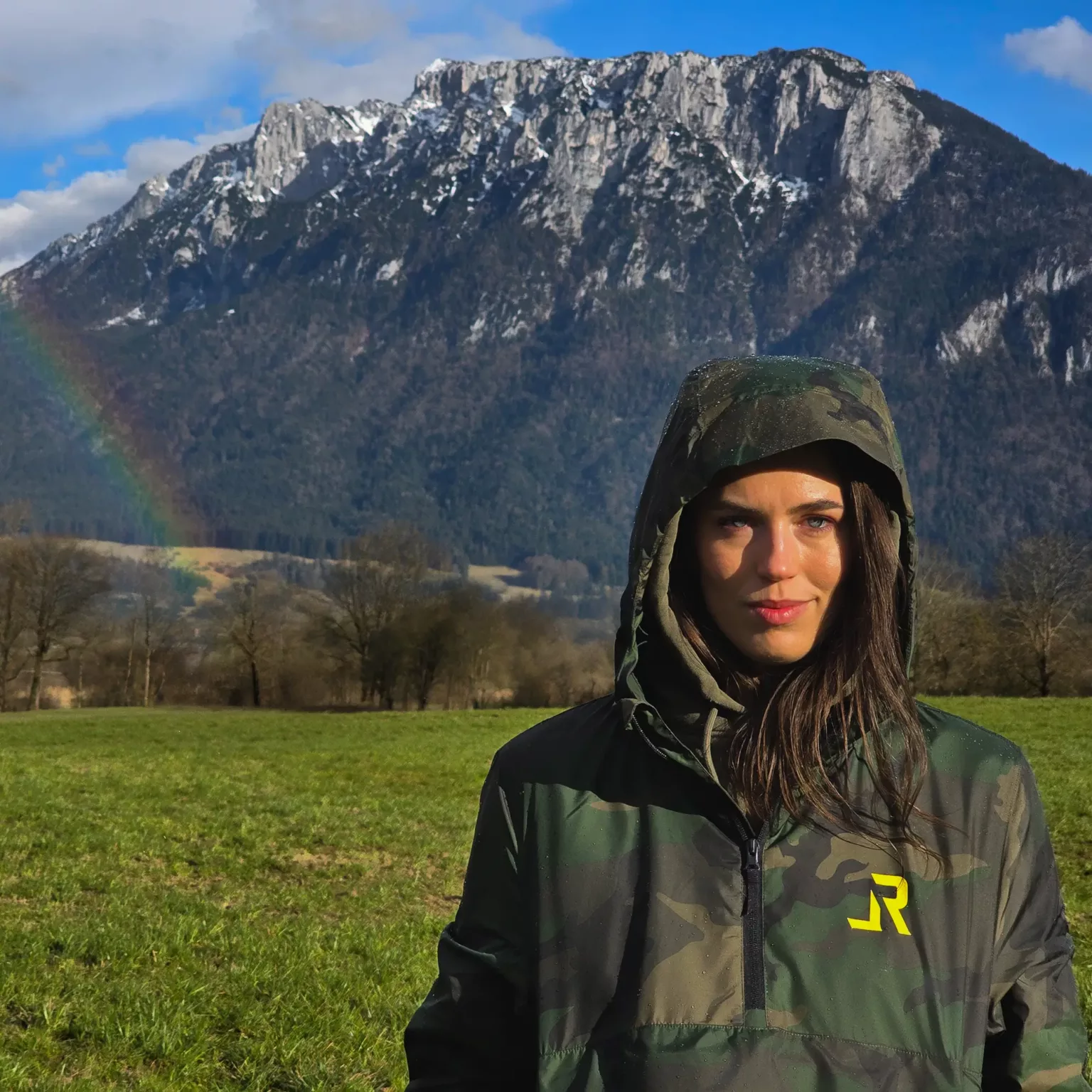
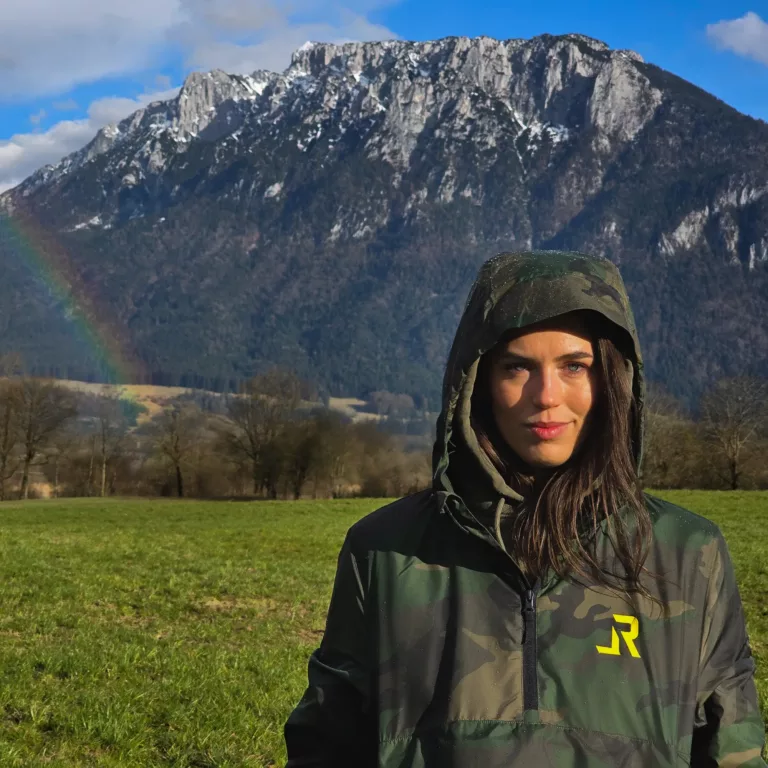
At LavendersRanch, our windbreakers are made from 100% recycled polyester – a material choice that aligns with how we think about clothing in general: built to last, made responsibly, and worth keeping.
A windbreaker is exactly the kind of piece where sustainability and function reinforce each other. It’s worn constantly, across seasons and conditions. It’s packed and unpacked, layered and shed, washed and worn again. A piece that holds up to that kind of use over years – made from materials that didn’t require virgin resources to produce – is one of the more honest things in a wardrobe.
Fair production conditions are part of our commitment as well. Only a garment made in a sustainable manner and produced under unfair labor conditions is truly conscious – which is why our approach to responsible clothing considers both dimensions, always.
What Makes Our Windbreakers Unique
The Tazzel System
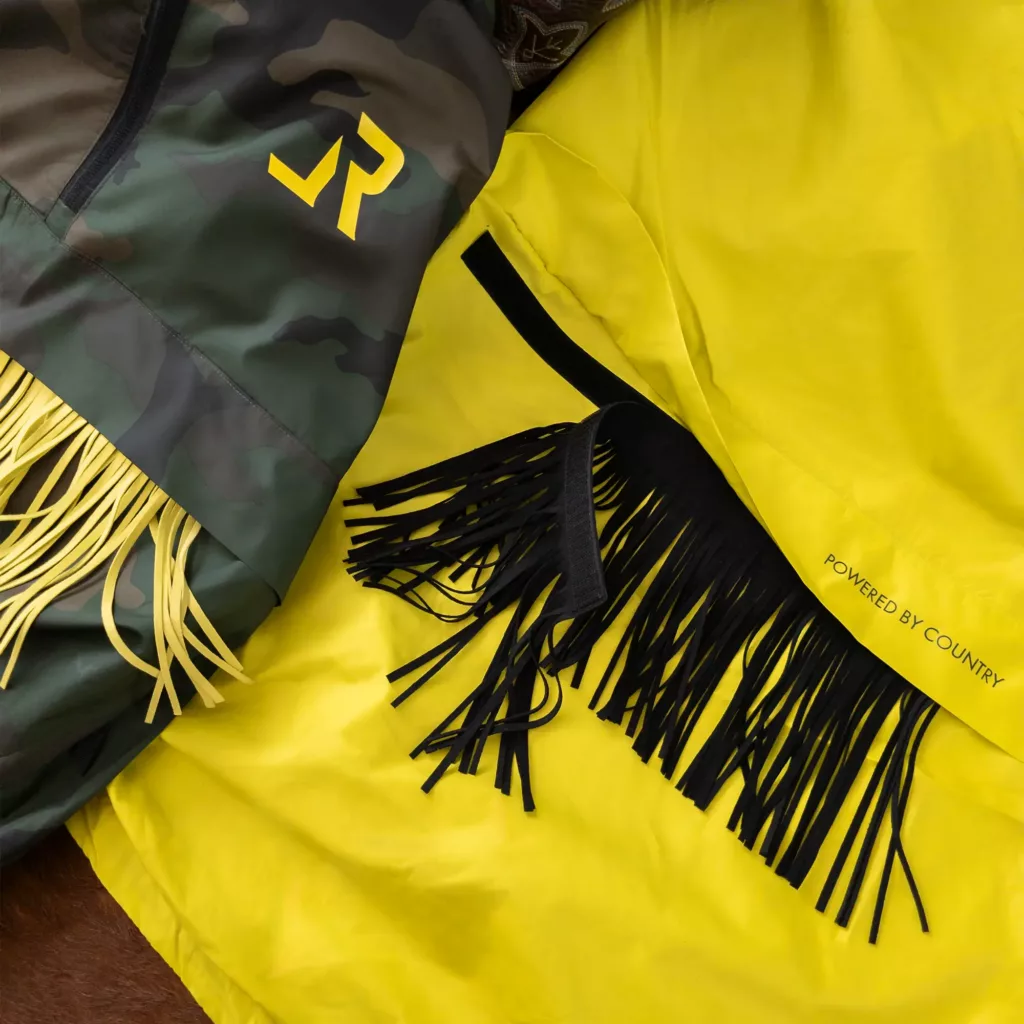
Our BETAZZELED Windbreakers feature something you won’t find elsewhere: our Tazzel system – detachable fringe elements that can be worn on the front, the back, or removed entirely depending on your preference.
It’s a design detail that does something rare in functional outerwear: it lets the piece adapt to you rather than the other way around. The fringe adds a Western character that’s distinctly LavendersRanch without being loud or impractical. Worn, removed, or switched – the windbreaker works either way.
Designed for Real Life
Beyond the Tazzel system, our windbreakers are built around one core idea: everyday usability without compromise.
They’re lightweight enough to pack into a bag without thinking about it. They’re cut for freedom of movement – the kind that matters when you’re actually moving, not just standing in a changing room. And they’re designed to layer naturally over a base or mid layer, so they work with your existing wardrobe rather than against it.
Outdoor and everyday use, made in a responsible manner.
Who Is a Windbreaker Perfect For?
A windbreaker earns its place in a lot of different situations and lifestyles – but it’s particularly well-suited for:
- Runners and outdoor trainers – breathable, lightweight, no sweaty membrane
- Dog owners – comfortable across varying activity levels, easy to pack
- Travelers – one layer that handles unpredictable weather without adding weight
- Riders – wind protection without restricting movement
- Anyone who layers – a windbreaker as an outer shell is one of the most versatile pieces you can own
If you’ve been reaching for a heavy jacket when the weather is merely changeable, a windbreaker might be the piece that replaces it for most of the year.
Our Windbreakers


Lightweight, Breathable, Responsible
Not every situation needs a heavy rain jacket. Most days, what you actually need is something lighter, more breathable, and more practical – something that handles the weather without handling you.
A well-made windbreaker covers the vast majority of everyday conditions better than the alternatives. And when it’s made from recycled materials and built to last, it earns its place in your wardrobe for years rather than a season.
If you have questions about fit, layering, or which piece works best for your use case, we’re always happy to help.
Howdy! 🤠
Lenny
Founder & CEO
LavendersRanch